
There is growing concern that tackling complex environmental challenges requires multifaceted approaches to engaging stakeholders and driving meaningful, lasting change. Mentorship and capacity building, for instance, are recognized as viable means of developing agripreneurial capacity and innovation among youth, thereby enabling food systems transformation.
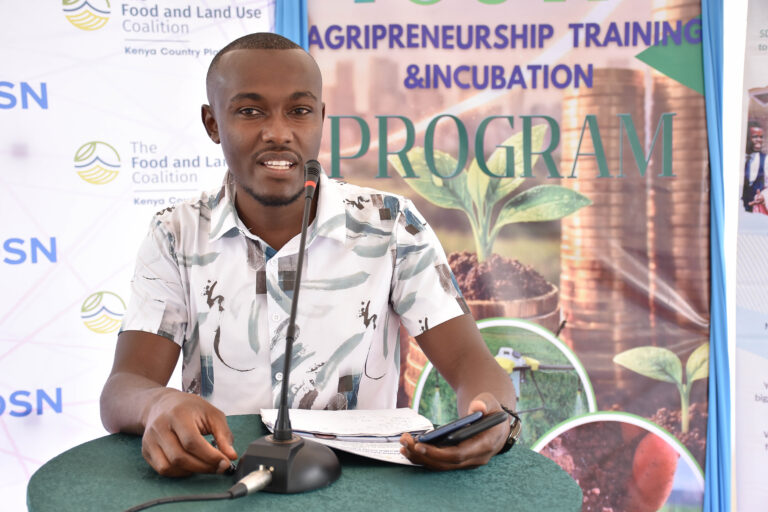
On 28th May 2026, young innovators, agripreneurs, researchers, and development practitioners from twelve counties across Kenya convened at Jomo Kenyatta University of Agriculture and Technology (JKUAT) for the Youth Agripreneurship Training and Incubation Programme. The event, which was co-organized by the Sustainable Development Solutions Network (SDSN) Kenya, the Future African Savannas (AFAS), the Food and Land Use Coalition (FOLU) Kenya, and partners, was themed “Youth Agripreneurship for Food Security: Advancing Agroecology, Environmental Restoration, Sustainable, Climate-Resilient Agri-Food Enterprises and Transformative Media Engagement”. The workshop provided a platform for peer-to-peer knowledge exchange and idea generation to support youth-led innovation and strengthen food systems transformations in an era of increasing climate uncertainty.
The training workshop took place against a backdrop of mounting challenges facing Africa’s agricultural sector. Climate change, land degradation, biodiversity loss, and food insecurity continue to threaten livelihoods and economic growth across the continent. Yet these challenges also present opportunities for innovation and transformation, particularly through the active engagement of Africa’s youth. With Africa’s population projected to reach approximately 2.5 billion people by 2050, the continent’s young people will play a decisive role in shaping resilient food systems, sustainable economies, and climate-adaptive communities. Recognizing this reality, the event focused on empowering young people with the knowledge, skills, and networks needed to drive agricultural transformation.
Among the speakers was Mr. Joseph Ndiba, a PhD candidate in Climate Change and Adaptation under the African Climate and Environment Centre- Future African Savannas (AFAS) Program, and Mr Boaz Ogada, a Research Associate at the Institute for Climate Change and Adaptation, University of Nairobi. During his presentation, Mr. Ndiba highlighted the critical role that AFAS plays in developing the next generation of leaders capable of addressing complex climate change impacts across various thematic fields, including agriculture. He noted that AFAS provides a platform that equips young leaders with knowledge and practical competencies on Nature-based Solutions (NbS) through Master’s and PhD training. By integrating themes such as climate change adaptation, agricultural transformation, and sustainability, the programme nurtures professionals who can generate evidence-based solutions and lead transformative change across the continent. On his part, Mr Ogada emphasized that addressing Africa’s agricultural challenges requires more than technological advancement alone. It demands a new generation of highly trained professionals who understand climate risks, can design adaptation strategies, and can translate knowledge into practical solutions for communities, institutions, and policymakers.
A key message the speakers conveyed was the importance of Nature-based Solutions (NbS) for building climate resilience. As climate change impacts intensify across Africa, participants were encouraged to adopt approaches that work with nature while enhancing livelihoods and ecosystem health. The Zai Pit System was highlighted as a notable example of a successful Nature-based Solution. Widely recognized for its effectiveness in restoring degraded lands, the practice has helped reduce desertification, improve soil moisture retention, and increase agricultural productivity in arid and semi-arid regions. Such approaches demonstrate how locally adapted, low-cost, and environmentally sustainable innovations can contribute to both climate adaptation and food security.
Throughout the day, various speakers explored diverse themes aimed at strengthening youth participation in agriculture and agribusiness. Discussions focused on transforming farming into profitable enterprises, agricultural innovation, entrepreneurship, business development, strategic partnerships, marketing, visibility, and the role of media in shaping perceptions of agriculture. These conversations collectively challenged the long-held view of agriculture as a subsistence activity and instead positioned it as a modern, innovation-driven sector with immense potential for economic growth, employment creation, and environmental sustainability. As Africa advances toward 2050, investments in youth capacity development, climate science, innovation, and sustainable agriculture will become increasingly important. Programmes such as AFAS, together with collaborative initiatives led by SDSN Kenya and FOLU Kenya, are helping to build the human capital required to navigate an increasingly complex climate future.
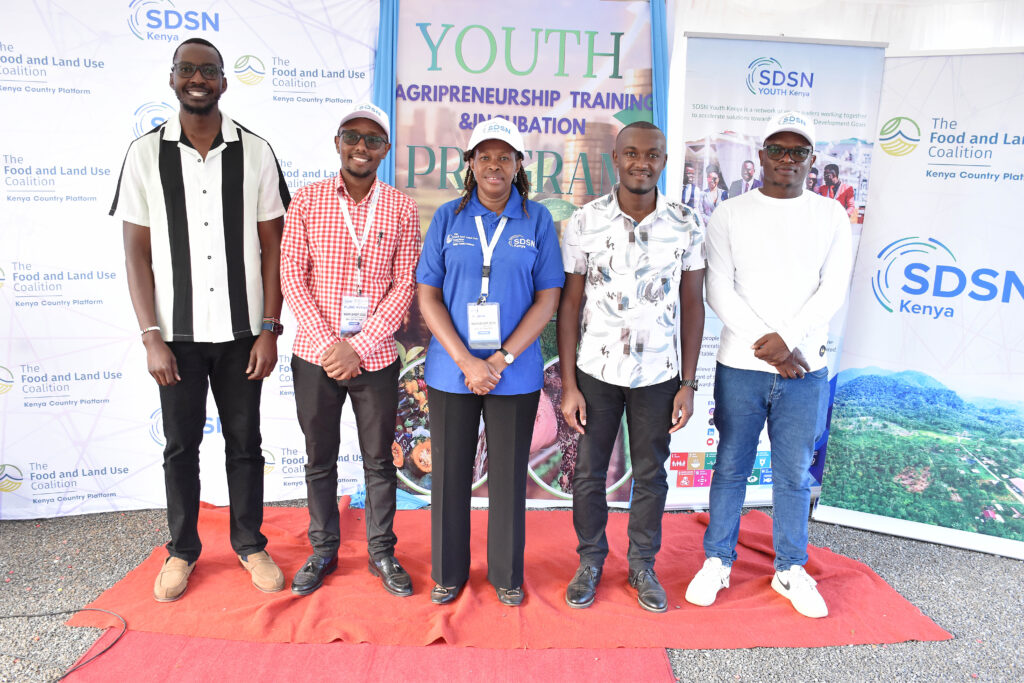
Information about the authors:
Joseph N. Ndiba is an AFAS PhD Student based at the Institute for Climate Change and Adaptation, University of Nairobi in Kenya (juniorndiba[a]gmail.com | ndibajoseph[a]students.uonbi.ac.ke)
Boaz Ogada is a Research Associate based at the Institute for Climate Change and Adaptation, University of Nairobi in Kenya (boazogada95[a]gmail.com | ogada.boaz@students.uonbi.ac.ke)